The first departure still has an address on Earth.
You pack for somewhere safer. Others are already going there. For a while, the new place becomes familiar enough that you stop calling it temporary.
Then the journeys grow longer, and the places left to go grow fewer.
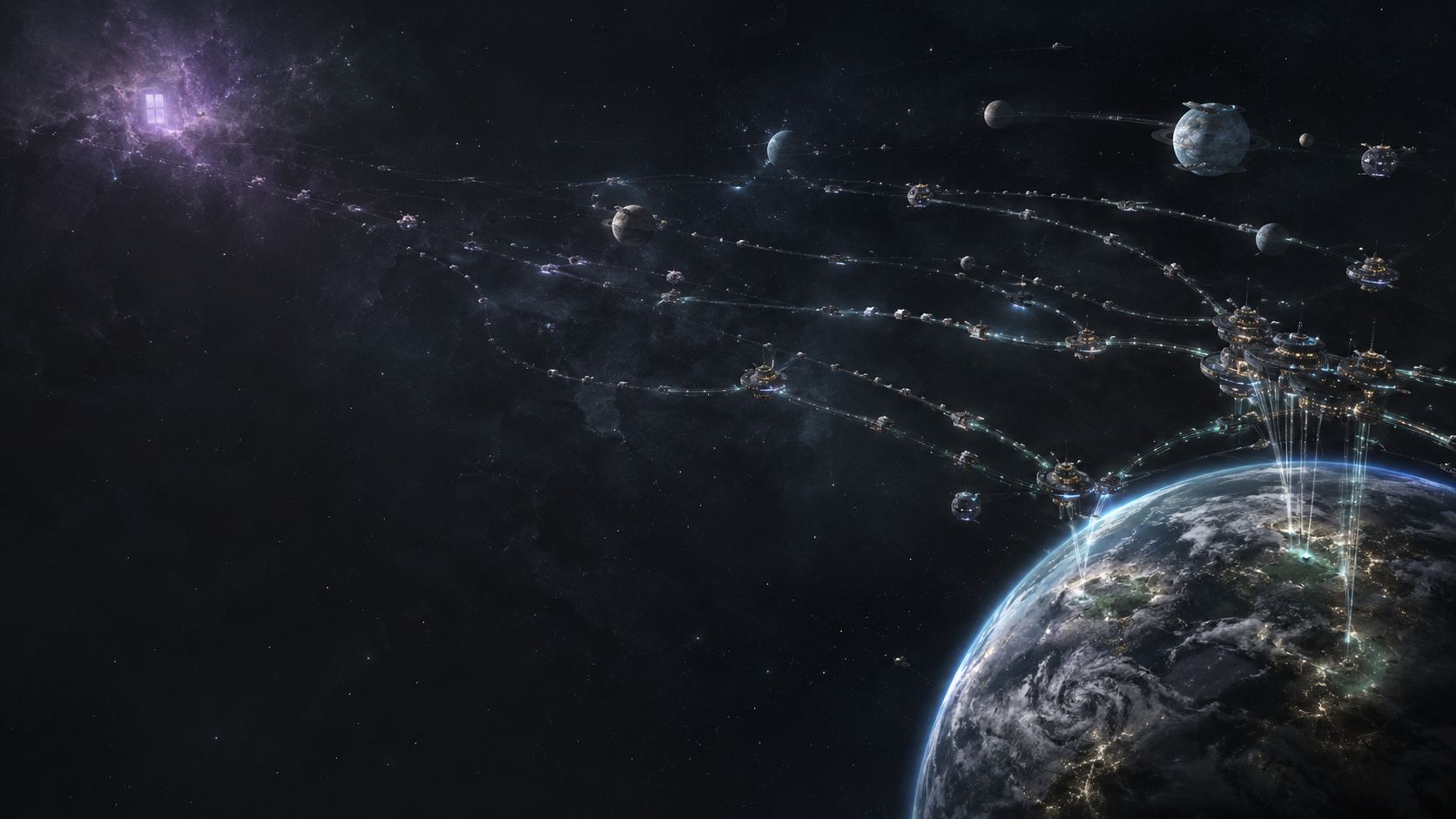
Above the clouds, stations fill with people who can still see the world they cannot return to. Waiting rooms become neighborhoods. Children learn the corridors by heart. Keeping everyone alive depends on supplies arriving from a planet with less and less to give.
Eventually, another departure is announced. This time, Earth will disappear from the window.
There are worlds ahead with air to test, ground to explore, and conditions nobody has learned to live with yet. Someone calls the destination promising. Someone else asks whether they should unpack everything this time.
The question travels farther than anyone expected.
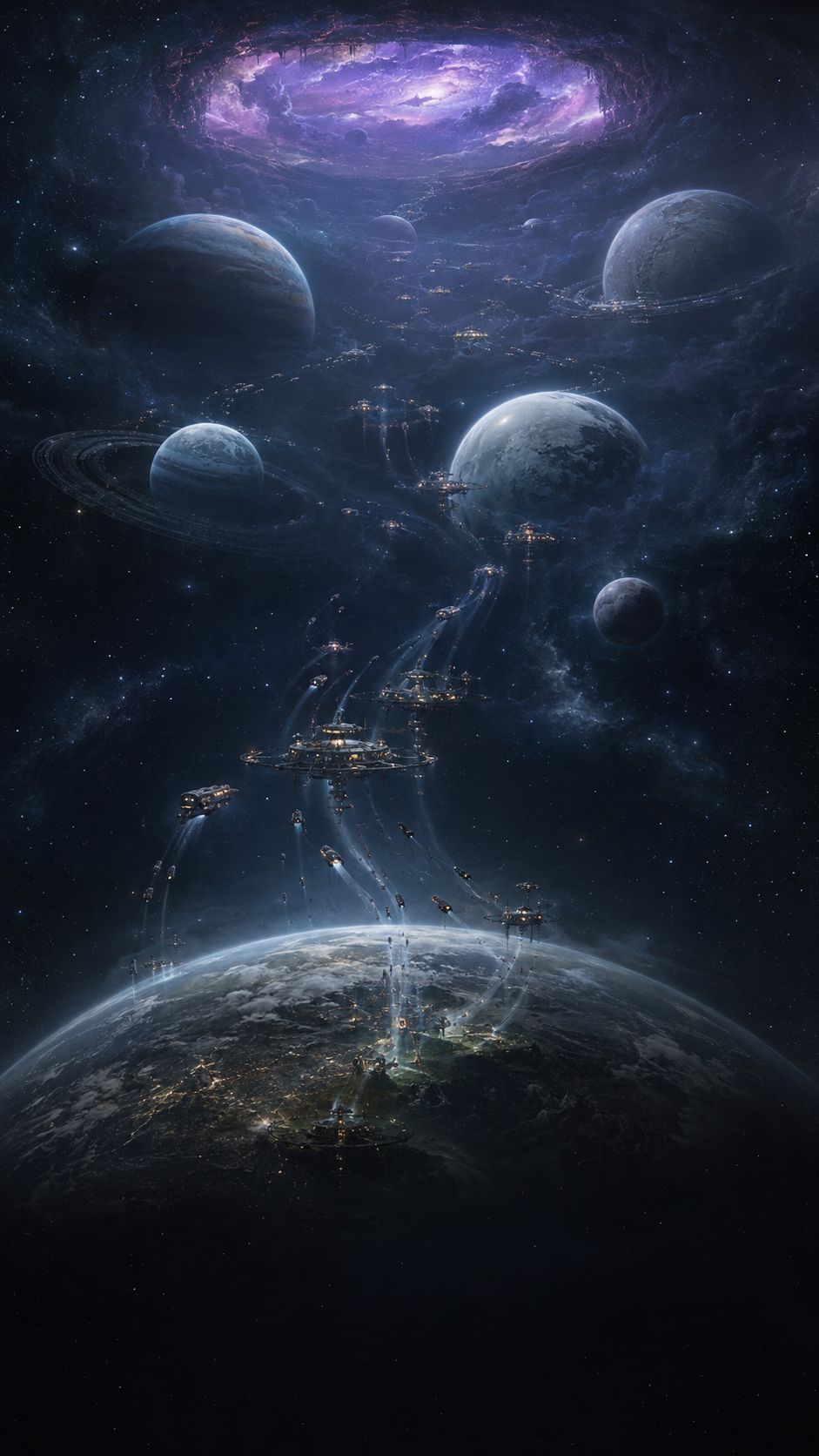
The Age of the Great Migration begins during Earth's Autumn, as environmental damage drives people toward the planet's remaining habitable regions. Retreat across the surface leads to crowded orbital refuges, then to long voyages in search of a replacement home.
Each stage solves an immediate danger while creating another dependence. Stations need supplies. Ships need destinations. A planet capable of sustaining life may still offer little safety or belonging. Settlements form beneath the possibility of another evacuation.
The stories follow what people carry through these transitions: names for places that no longer exist, habits learned under another sky, relationships, grief, and the stubborn pleasure of making somewhere livable. Survival occupies more of life, while the reasons for surviving become easier to overlook.
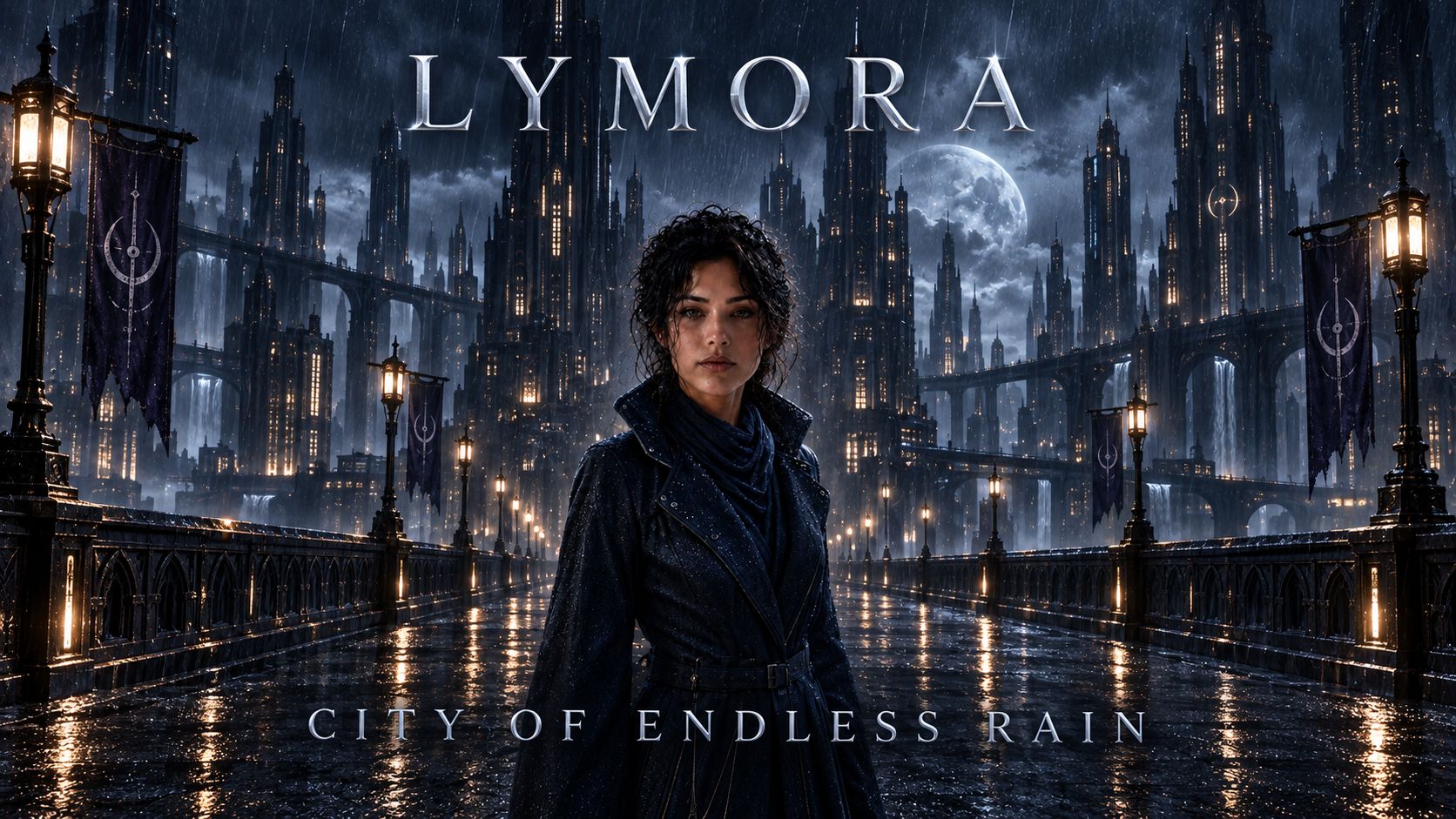
City of Endless Rain enters this era through Lymora, who grew up within it. Her songs stay close to the memories, strange beauty, and quiet losses that a history of departures cannot fully record.